Affiliate marketing is one of the most talked-about income streams online and also one of the most misrepresented.
The pitch usually goes: promote products, earn commissions, make passive income while you sleep. That is technically true. It leaves out the part where it takes 6 to 18 months of consistent work before you see meaningful income.
This article explains how affiliate marketing actually works: the mechanics, the models, the economics, and the realistic timeline.
The Basic Mechanism
Affiliate marketing is revenue sharing. A company wants more customers. You have an audience or create content those customers find. The company pays you a commission for every customer you send them.
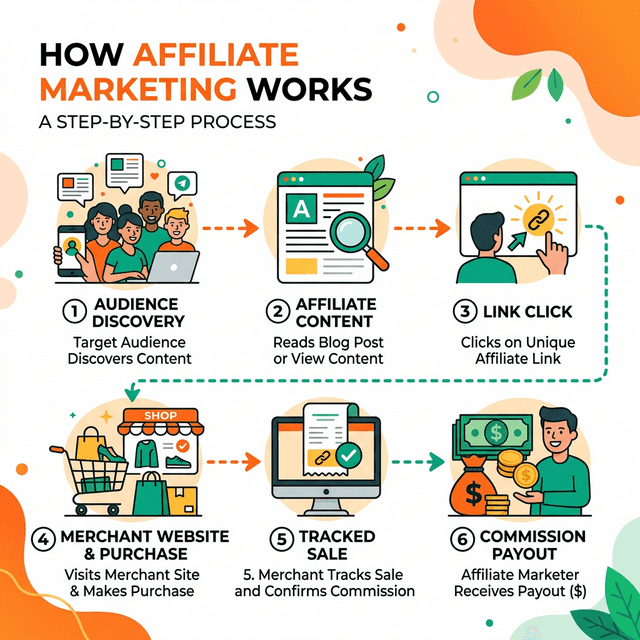
The process works like this:
- You join an affiliate program and get a unique tracking link
- You publish content, usually articles, videos, or social posts, that include that link
- A reader clicks your link and lands on the company's website
- If they buy (or sign up, or complete another action), the tracking system records that your link sent them
- The company pays you a commission, usually 30 to 90 days after the sale
The tracking is handled by a cookie placed on the reader's browser when they click your link. That cookie has a duration, often 24 hours to 90 days. If the reader buys within that window, you earn the commission.
The Three Main Commission Models
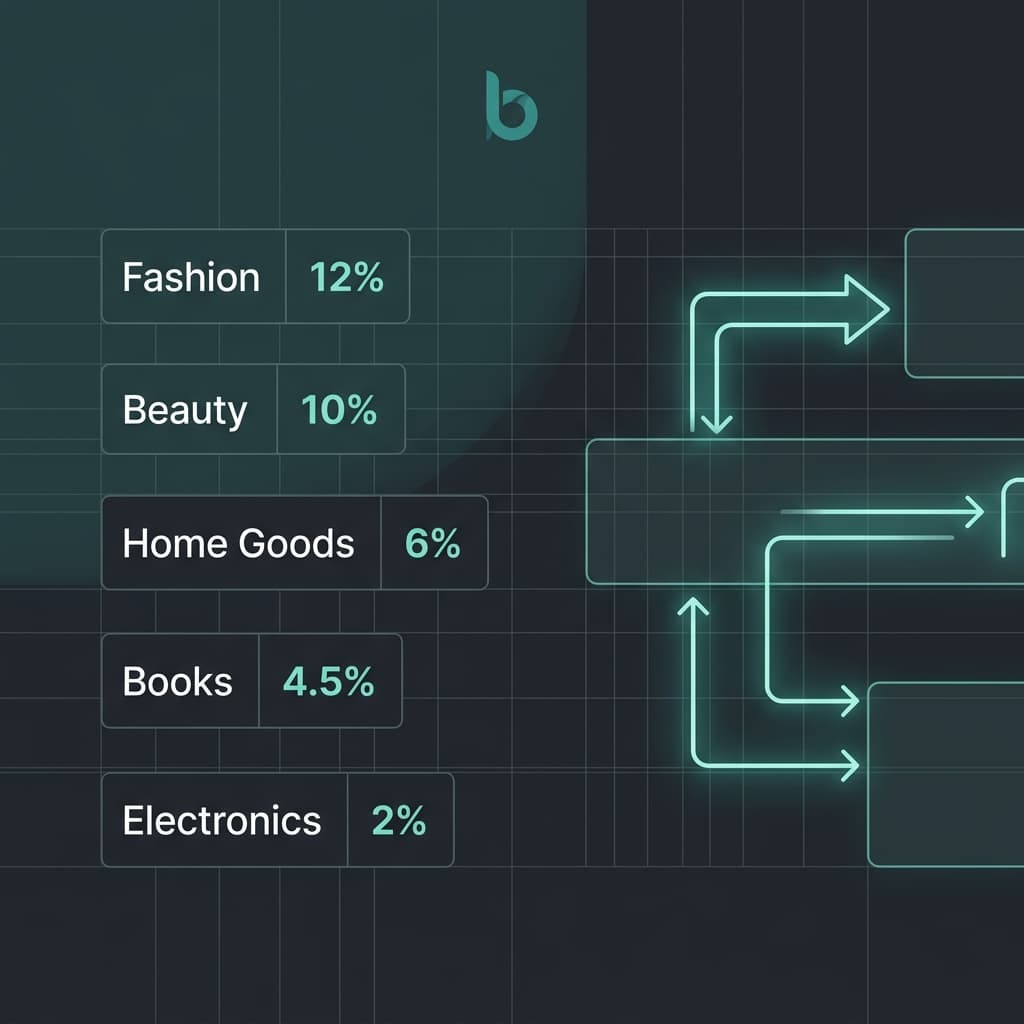
Pay per sale (CPS). You earn a percentage of the sale price when someone buys. Amazon Associates uses this model. Commission rates range from 1 to 20 percent depending on the product category.
Pay per lead (CPL). You earn a fixed fee when someone completes a specific action, usually signing up for a free trial or submitting their email. Software companies often use this. A completed signup might pay $5 to $50 depending on the product.
Pay per click (CPC). You earn a small amount every time someone clicks your link. This is rare in modern affiliate marketing because it is easy to abuse. Most programs have moved to CPS or CPL.
Recurring vs One-Time Commissions
This distinction matters enormously for your income stability.
One-time commissions pay once, when the sale happens. Amazon Associates is a one-time commission program. You earn 4 percent on a $50 book, that is $2, once.
Recurring commissions pay every month as long as the customer stays subscribed. Many SaaS products offer this. If you refer someone to a project management tool at $50 per month and you earn 20 percent, you earn $10 every month that person remains a customer. If they stay for 24 months, you earn $240 from one referral.
Recurring commissions are structurally better for building passive income. Focus on programs that offer them wherever your niche allows.
What Makes Content Convert
Not all affiliate content earns equally. There are three types that convert above average:
Comparison articles. "Product A vs Product B: Which Is Better For X?" These target readers who are already in buying mode and just need to make a decision. These convert at 3 to 8 percent of clicks, meaning 3 to 8 out of every 100 people who click your affiliate link buy something.
Review articles. "My Honest Review of [Product] After 6 Months." These work best when they are specific, include real use cases, and honestly mention downsides. Readers trust reviews that are not all positive.
Best-of lists. "The 7 Best [Tools] for [Specific Use Case] in 2026." These target informational searches but include enough buying intent to convert. They work best when you have first-hand experience with most products on the list.
General educational articles (how-to guides, explainers) generate traffic but convert at much lower rates. They are worth writing because they build authority and internal link opportunities, not because they earn direct commissions.
The Economics Behind It
Here is a realistic example of how the numbers work in a steady state:
A blog post targeting "best email marketing tools for small businesses" gets 1,000 monthly organic visitors. That is a realistic number for a well-optimized article on a low-competition keyword after 6 to 12 months of ranking.
Of those 1,000 visitors, 15 percent click an affiliate link. That is 150 clicks.
Of those 150 clicks, 5 percent convert to a sale (industry average for software products). That is 7 to 8 new customers per month.
If the product pays $30 per sale as a one-time commission, that article earns $210 to $240 per month.
Write 20 articles like that, at scale, with varying traffic and conversion rates, and you have a realistic path to $2,000 to $5,000 per month.
None of that happens in month one. It happens in year two.
What Nobody Tells You About the Timeline
The most accurate way to describe affiliate marketing income is: slow to start, then compounding.
Month 1 to 3: Write content, earn nothing from it. Search engines are still deciding whether to trust your new domain.
Month 3 to 6: Some articles start ranking on page 2 or 3. Small amounts of traffic arrive. Earnings might be $10 to $50 in a good month.
Month 6 to 12: Articles climbing to page 1 start generating real traffic. Monthly income can reach $200 to $500 if the content is good and the keywords are well chosen.
Year 2: With consistent publishing and some backlink growth, income in the $500 to $2,000 range becomes achievable for focused niches.
These are not guarantees. They are patterns from people who have done this seriously. The people who quit at month 3 never see the compounding. The people who stay see it clearly by month 12.
The Starting Point
If you are brand new to affiliate marketing, start with Benable, then move to a content strategy once you understand how the linking and tracking mechanics work.
For the best affiliate programs in the SEO and side hustle niche, see the best affiliate programs for bloggers.