
You already know what Benable is. You are here because you are trying to decide whether to actually use it as an affiliate and whether the commissions are worth your time.
This post skips the beginner explanation and goes straight to the mechanics. Commission rates by category, how the tracking works, what the payout process looks like from inside the dashboard, and where it holds up versus Amazon Associates for someone making a deliberate choice between the two.
If you want the beginner explainer first, that is here. This post assumes you are past that.
How Benable's Commission Structure Actually Works
Benable is not an affiliate program with its own fixed commission table. It is an aggregator.
When you paste a product URL into a Benable list, the platform runs that URL through a matching process across its partnerships with major affiliate networks including Impact, ShareASale, and CJ Affiliate. It then routes your link through whichever partnership yields the highest commission for that specific retailer.
This means the commission rate you earn on Benable is essentially the standard affiliate rate that retailer offers through their network program. Benable takes its cut from the retailer side of the arrangement. You receive the creator's share.
The practical implication is that your commission rate is not fixed. It varies by brand, by product category, and occasionally by the time of year when brands adjust their affiliate terms.
Commission Rates by Category
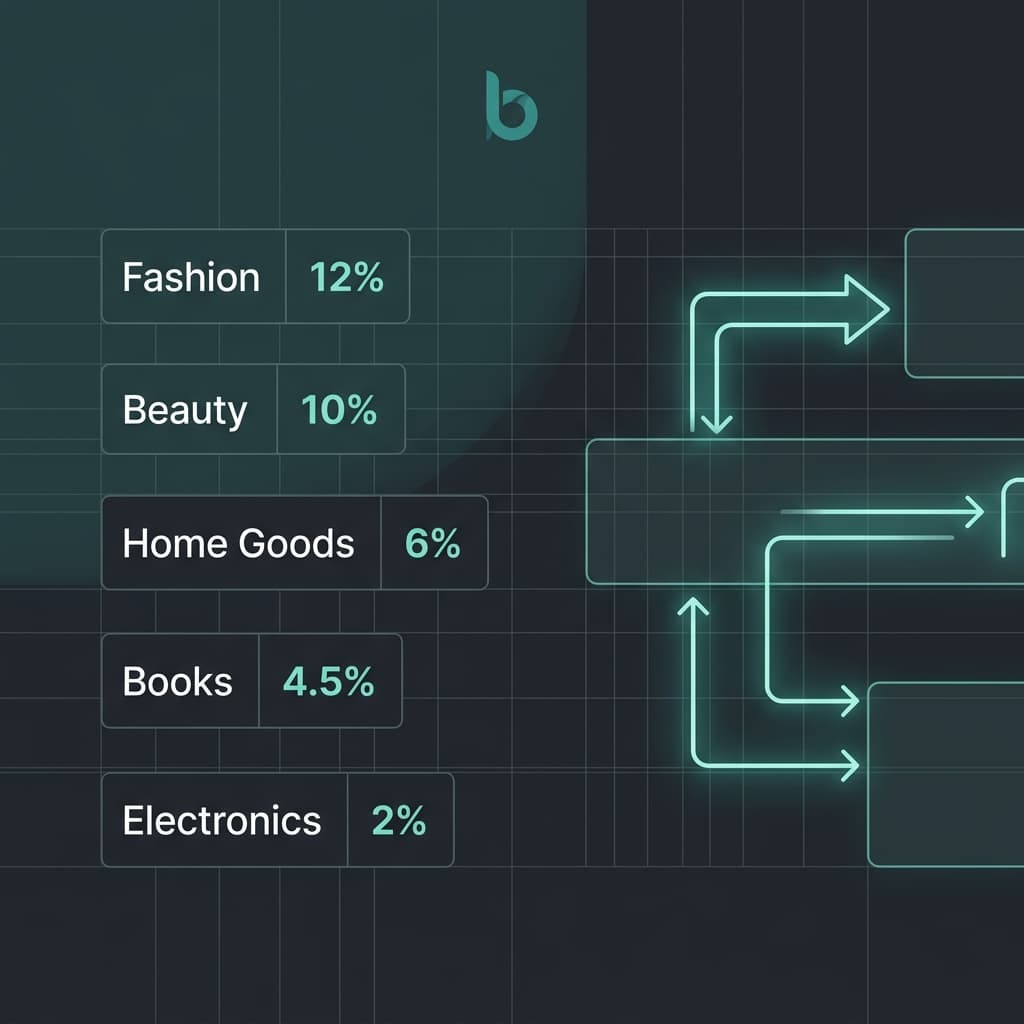
These are realistic ranges based on what Benable creators typically earn across common product categories. Rates vary by retailer within each category and can change when brands update their program terms.
| Category | Typical Commission Range | Notes |
|---|---|---|
| Fashion and Clothing | 8% to 15% | Some boutique brands go higher |
| Beauty and Skincare | 8% to 12% | Sephora, ULTA, and direct brand programs |
| Home Goods and Decor | 4% to 8% | Furniture and large items tend toward lower end |
| Kitchen and Cookware | 4% to 7% | Mid-range for most mass market brands |
| Books | 4% to 5% | Amazon rates apply for most book purchases |
| Fitness and Outdoor | 5% to 10% | Wide variance depending on brand |
| Tech and Electronics | 2% to 4% | Lowest category across all affiliate programs |
| Baby and Kids | 4% to 8% | Strong conversion rates often offset lower rates |
Fashion, beauty, and home goods are the categories where Benable's aggregator model creates the most meaningful advantage over Amazon Associates. In those categories, buying directly from a brand's site through their native affiliate program regularly pays two to three times what Amazon pays for the same product in the same category.
Electronics and tech are weak on Benable for the same reason they are weak everywhere. Brands in those categories run tight margins and affiliate programs reflect that.
How Tracking and Attribution Work
This is the part most people get wrong about Benable and it affects how you think about link placement.
When someone clicks a product link inside your Benable list, they are redirected through Benable's affiliate tracking layer to the retailer's site. Benable's system records the click event and stamps the session with your creator attribution.
You do not get an individual affiliate link the way you do with Amazon Associates or a ShareASale program. The link lives inside your Benable list. The click on your list is the trackable event.
This matters for one specific reason: you cannot copy a Benable affiliate link and drop it into a blog post, an email, or a Pinterest description as a direct affiliate link. Your traffic has to go to your Benable list first, and then convert from the list to the retailer.
The funnel is:
Your blog post or Pinterest pin > Your Benable list > Retailer purchase
That is one extra step compared to a standard affiliate link. Whether that additional click reduces conversions depends on how you frame the list and how much the reader trusts the list concept by the time they arrive.
Cookie Duration by Retailer Type
Because Benable routes through network partnerships, cookie duration depends on what that specific retailer has negotiated with its network.
The breakdown works like this in practice:
Direct brand programs (fashion, beauty, home): Most of these brands run 14 to 30 day cookies through Impact or ShareASale. A 30-day window is common for lifestyle and home brands.
Mass market retail (Target, Walmart, general merchandise): Typically 7 to 14 day cookies. These brands run higher volume with lower per-click value, and their cookie policies reflect that.
Books and Amazon-backed products: Amazon's 24-hour cookie applies. This is the same limitation you face with Amazon Associates directly.
Boutique and DTC brands: These vary the most. Some run 30 to 60 day cookies as a competitive move to attract affiliates. You will see this more in beauty and fitness categories.
The structural advantage over Amazon Associates is clear for everything except books and Amazon-native products. A 30-day window versus a 24-hour window is not a marginal difference on higher-priced items where buyers research and compare before purchasing. I covered this gap in detail in the Benable vs Amazon Associates comparison if you want to see the math on how much that window actually changes earnings.
How Sign-Up Actually Works
Benable uses an invite model. You cannot create an account by visiting the site and signing up directly without an invite or joining a waitlist.
The fastest way in is through a referral link from an existing member. Using an invite link also gets you a 10% bonus on your early commissions, which stacks on top of whatever the standard commission rate is for each sale.
You can use my invite link to skip the waitlist: benable.com/i/EMXH6 or find more about the invite code in this post.
Once inside, setup is fast. You create your profile, start building lists by pasting product URLs, and the platform handles the routing automatically. There is no per-program application process. You are not going through individual brand approvals. Benable's existing network partnerships cover you across all 35,000 partner brands from the moment your account is live.
Payout Mechanics
Your commissions accumulate in your Benable dashboard as two separate figures: pending and confirmed.
Pending commissions are sales that have been recorded but are still within the retailer's return window. The retailer has not yet released the commission. Pending commissions do not count toward your withdrawal threshold.
Confirmed commissions are cleared sales where the return window has passed and the retailer has released the payout to Benable. These are the earnings that count toward the $80 minimum.
The $80 threshold is real and it is the biggest friction point for new users. At average commission rates for low-to-mid-ticket products, reaching $80 in confirmed commissions takes meaningful time without consistent traffic behind your lists. The full breakdown of how the threshold works, what slows it down, and how to get there faster is in the dedicated payout guide.
The short version: promote higher-ticket products in categories with stronger commission rates (fashion, beauty, home) and drive external traffic to your lists rather than relying on Benable's internal discovery alone.
Is Benable Legit? Are the Commissions Real?
Yes. The commissions are real and the platform pays out.
The concern about legitimacy usually comes from two places. First, the invite-only model looks like a gatekeeping mechanic from a pyramid scheme at first glance. It is not. The invite system is a spam prevention mechanism. Benable's value to its network partners depends on creator quality. Open signups with no friction produce a lot of noise.
Second, people see commissions accumulate on the dashboard and wonder whether they will actually receive the money. The platform has been running since 2022 and has a documented track record of paying out. I have personally received commissions and documented the early ones here.
The skepticism is reasonable. Apply it to the timeline and commission math, not to whether the payouts eventually land.
How It Stacks Up Against Amazon Associates
Here is the honest comparison for someone deciding between the two as a deliberate strategic choice.
| Factor | Benable | Amazon Associates |
|---|---|---|
| Commission rates | 2% to 15% depending on category | 1% to 10% by strict category table |
| Cookie duration | 7 to 30 days (varies by retailer) | 24 hours (90 days if cart add) |
| Minimum payout | $80 confirmed balance | $10 (gift card) or $100 (direct deposit) |
| Account closure risk | None (no minimum sales requirement) | Account closed if no sales in first 180 days |
| Link format | Traffic must go to your Benable list first | Direct affiliate link usable anywhere |
| Built-in discovery | Yes, within Benable's platform | None |
| Setup per product | Paste URL into list | Generate individual links per product |
The decision framework I use: Amazon Associates for books, for products where Amazon's conversion advantage matters (items with high trust reliance on Amazon checkout), and for impulse purchases under $30 where the 24-hour cookie is unlikely to matter anyway.
Benable for fashion, beauty, home, and any product where a 30-day cookie meaningfully improves the odds of capturing a delayed purchase. Also for bloggers who are too new to meet Amazon's 180-day sales requirement, since Benable has no account closure risk.
The most common mistake is treating this as an either-or decision. Both accounts can be live simultaneously. The only question is which one you route each specific recommendation through.
Is It Worth Joining?
For someone already creating content or Pinterest pins around product recommendations: yes. The sign-up takes twenty minutes and there is no ongoing cost.
The honest qualifier is that Benable works as part of a content or traffic strategy, not as a standalone income source. A list sitting on Benable with no external traffic will earn slowly. The same list with a Pinterest audience or a blog post behind it earns materially faster.
If you are a blogger evaluating whether to add Benable alongside your existing affiliate setup, the answer is almost always yes. The incremental effort is low, the upside in categories like fashion and home is real, and the 30-day cookie window alone makes it worth running parallel to Amazon Associates on any recommendation where the buyer might need more than 24 hours to convert.
Join with invite code EMXH6 at benable.com/i/EMXH6 and get the 10% early commission bonus on top.
Kamal Deen builds niche blogs and documents the affiliate strategies behind them. All commission data referenced here comes from his own active Benable account.