The Number That Should Have Felt Good
I woke up one morning, opened my phone, and saw numbers I had never seen before on a blog less than 30 days old.
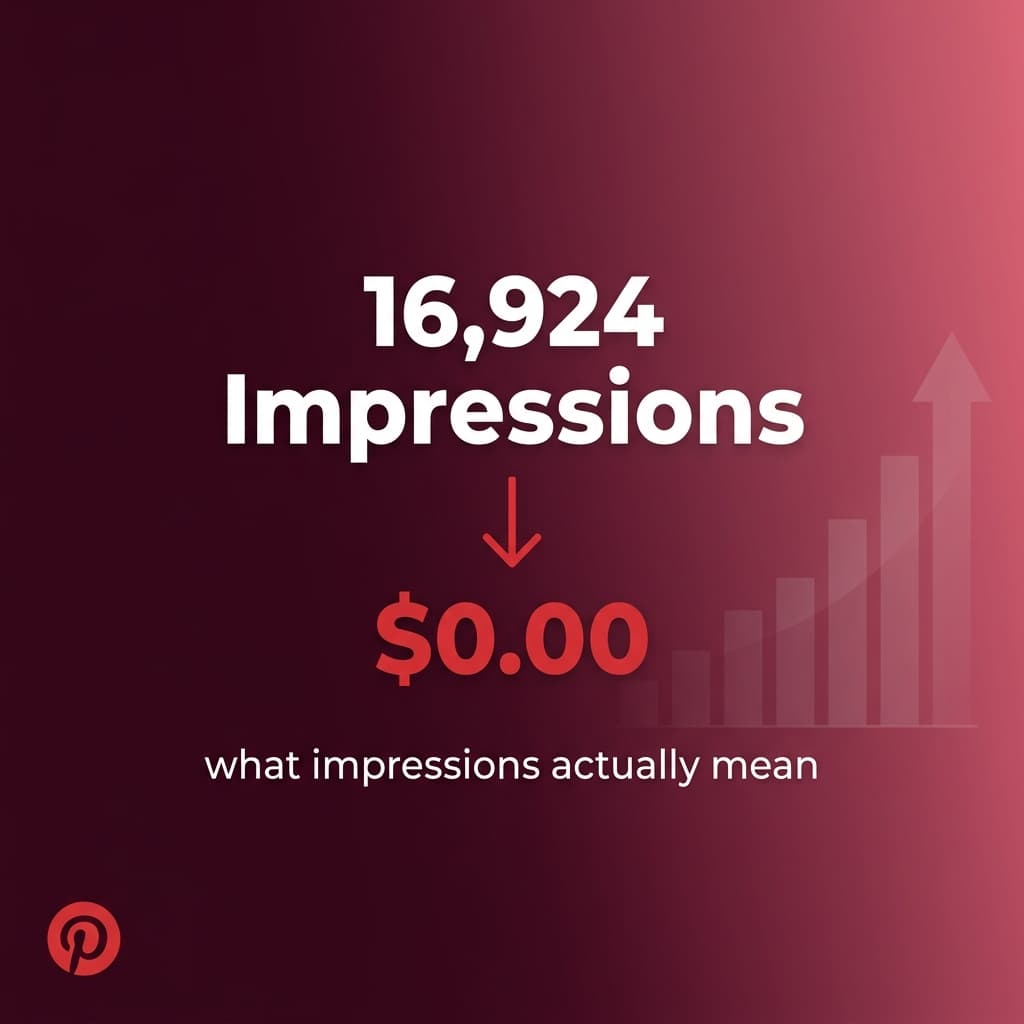
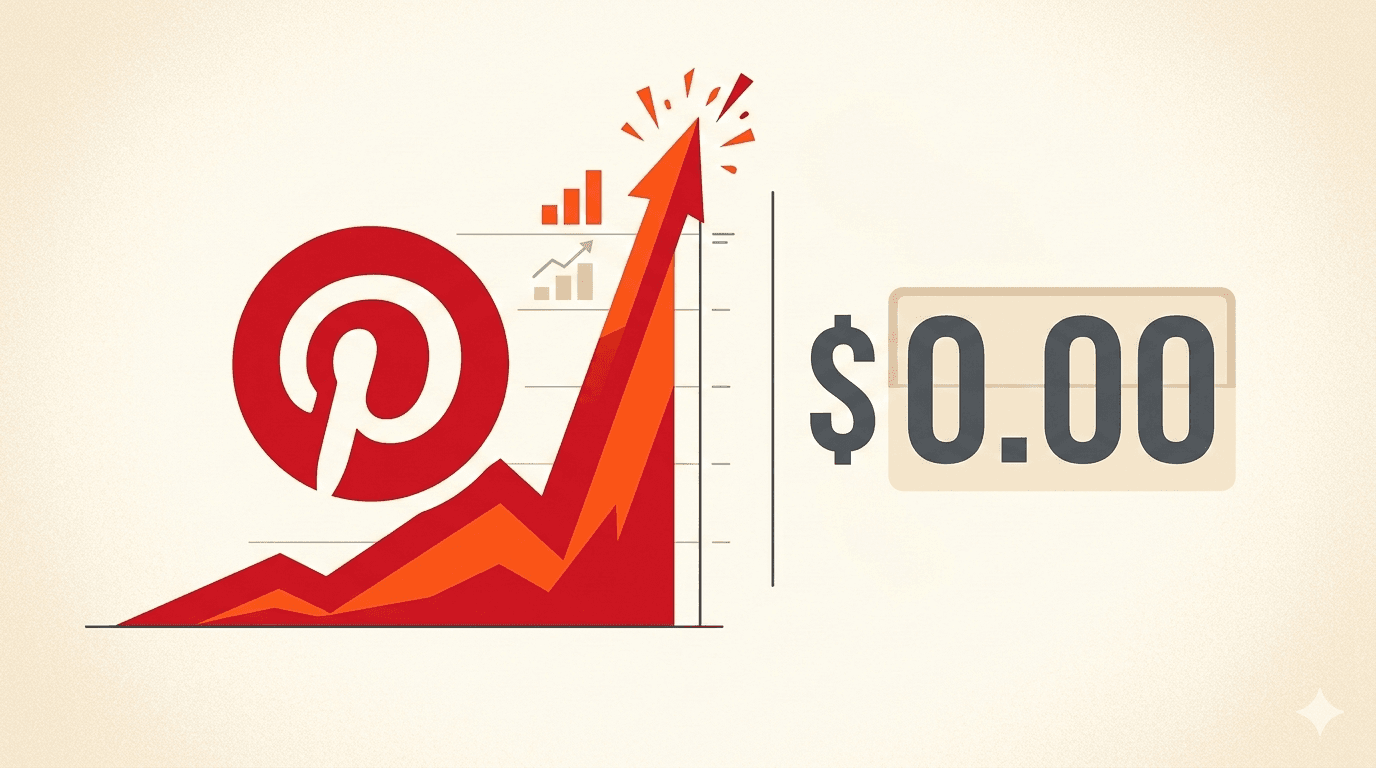
16,924 Pinterest impressions in seven days. 1,302 engagements. 163 saves. One single pin had driven 12,000 impressions on its own. Traffic was coming from the United States, Germany, France, and Canada.
For about four minutes I felt like I had figured something out.
Then I opened my revenue dashboard.
$0.00.
That number reset everything. Four minutes of feeling like a genius, followed by a very clear lesson about the difference between attention and income.
If you are not sure what Pinterest impressions actually measure, that explanation is here. This post is about what happens when the number is big and the revenue is still zero.
The Exact Data From That Week
Here is everything the analytics showed, documented precisely so this is useful as a reference and not just a story.
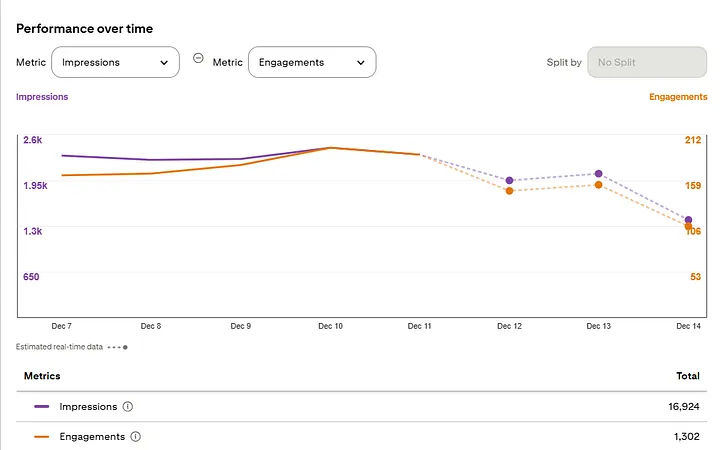
Pinterest performance over 7 days: 16,924 total impressions. 1,302 engagements. 163 saves. Traffic arriving from the United States, Germany, France, and Canada. Page views up over 100% week over week.
Revenue across all channels: $0.00.
On paper those Pinterest numbers look strong for a brand new blog. The traffic quality was genuinely good. Real users from high-value countries. Real engagement, not bot activity. The pins were being saved, which signals that real people found them worth keeping.
None of it produced a single cent.
That gap between traffic quality and revenue outcome is exactly what this article is about.
Why Traffic and Revenue Are Not the Same Thing
This is the core misunderstanding that costs new bloggers months of wasted effort.
Traffic is attention. Revenue is intent.
Those are two completely different things and optimizing for one does not automatically produce the other.
When someone scrolls Pinterest and sees your pin, they are in a browsing state. They are consuming visual content passively. If your pin is well designed and the topic interests them, they click through to your blog. That click shows up in your analytics as a session, a page view, a new visitor.
What it does not show up as is a buyer.
A Pinterest visitor who arrives at a blog post about home gardening or wellness tips is there to read something interesting. They are not there to purchase. Unless the page they land on has a specific reason for them to take an action, they will read, possibly save the post, and leave.
That is not a traffic problem. That is a structural problem. Structural problems do not get solved by getting more traffic.
More traffic into a system with no conversion mechanism produces more of exactly what I had. Impressive numbers and $0.
The Three Specific Things That Were Missing
When I stopped looking at the data emotionally and started reading it as information, three gaps became obvious.
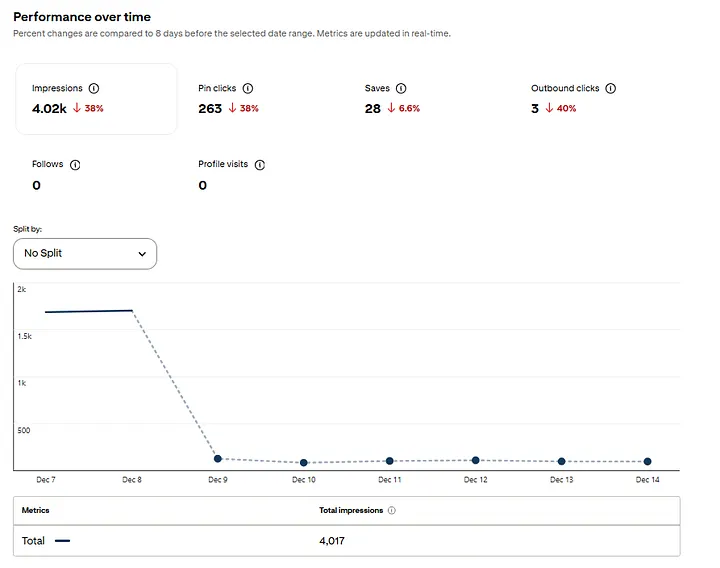
No clear next step for the visitor.
Every article I had published was designed to inform. Someone came, they read something useful, and the page ended. There was no logical next action presented to them. No tool to try. No related resource that solved the next problem they would naturally have. No reason to go deeper into the site. I had invited people through the door and given them nothing to do once they arrived.
No content designed around buyer intent.
The pins that drove the most traffic were connected to informational content. How-to articles, tips, general interest topics. That content attracts readers, not buyers. A reader and a buyer behave differently on a website. A buyer arrives with a specific problem and a willingness to take action to solve it. An informational reader arrives curious and leaves satisfied without taking any action at all. I had built a site full of content for readers and none for buyers.
No email capture.
16,924 people saw my content that week. Of those, some meaningful percentage clicked through to the blog. Every single one of them left without leaving any contact information. No email address. No way to follow up. No mechanism to turn a one-time visitor into a returning reader. Each session was a closed loop with no continuity. The traffic came, went, and left nothing behind.
What the Demographics Data Revealed
The audience breakdown was the most instructive part of the entire dataset.
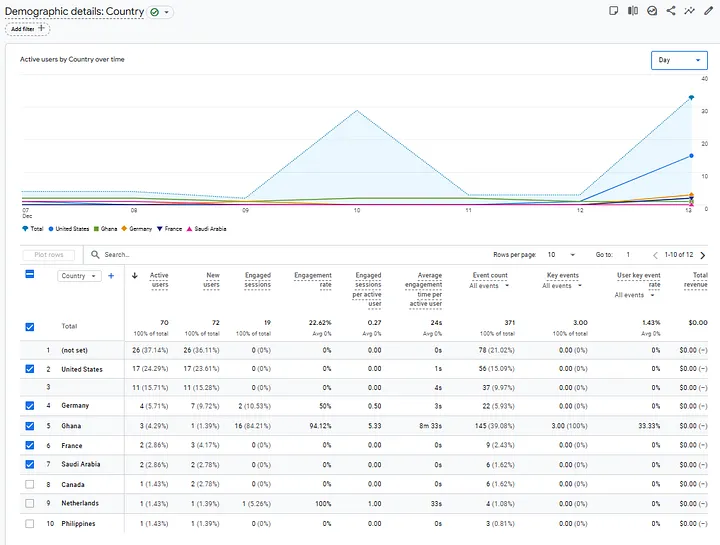
The traffic was coming from high-value countries. Real users with real purchasing power.
In affiliate marketing and content monetization, traffic quality matters enormously. Low-quality traffic from disengaged audiences produces near-zero revenue even with decent conversion infrastructure. High-quality traffic from engaged users in strong markets can produce meaningful revenue even with imperfect systems.
The traffic I had was the good kind. That meant the foundation was not broken. The content was reaching real people who cared enough to click and engage.
The problem was entirely downstream of the traffic. The traffic arrived at a site that had not been built to do anything with it.
That distinction matters because it changes what needs fixing. The solution was not to change the content strategy, find different keywords, or redesign the Pinterest pins. The solution was to build the infrastructure that converts the traffic already arriving.
The Structural Fix
The insight that reframed everything was straightforward.
Content brings people in. Systems convert them.
A blog post is not a business. A blog post is an entry point. What happens after someone arrives at that entry point determines whether attention becomes revenue.
The specific changes that followed were not complicated.
Every article needed a clear next step. Not a vague follow me request at the bottom. A specific, relevant action connected to the topic of the article. If someone is reading about Pinterest traffic, the next step is signing up to follow the experiment. If someone is reading about affiliate marketing tools, the next step is clicking through to a tools page. The next step has to be logical, not generic.
Content needed to be built around problems people pay to solve. Informational content attracts readers. Content about specific tools, specific income strategies, and specific processes attracts buyers. Both types have value but only one converts into revenue with any reliability.
Email capture needed to exist from day one. Not eventually. Not once the traffic gets bigger. From day one. A visitor who gives you their email address is worth more than a hundred visitors who leave without one.
What 16,000 Impressions and $0 Actually Means
Here is the reframe that made the experience useful rather than discouraging.
$0 from 16,000 impressions is not failure. It is a diagnostic result.
It tells you precisely that traffic generation is working and conversion infrastructure is not. That is valuable information. It is far more valuable than making $5 from 500 visitors because that result tells you almost nothing about where the constraint is.
The data from that week gave a clear picture of exactly what was working and exactly what was missing. Traffic quality was strong. Content was reaching real people in the right countries. Engagement was real. The gap was entirely in what happened after the click.
That is a solvable problem. Broken traffic is much harder to fix than a missing conversion layer.
The Lesson Distilled
16,924 impressions. 1,302 engagements. 163 saves. $0 revenue.
Traffic without structure produces exactly that result every time regardless of traffic quality, content quality, or platform.
The lesson is not that Pinterest does not work. Pinterest drove real traffic from real people to a brand new blog in its first 30 days. That is genuinely strong performance.
The lesson is that traffic is an input. Revenue is an output. The conversion layer between those two things does not build itself.
Build the system before you scale the traffic. Otherwise you are filling a bucket with no bottom.
Where This Experiment Went Next
The week after this data came in, the entire approach changed.
Affiliate infrastructure went in. Email capture went in. Content began being built around specific buyer intent alongside informational content. The Pinterest strategy stayed the same because the traffic quality was already strong. The destination those pins pointed to became fundamentally different.
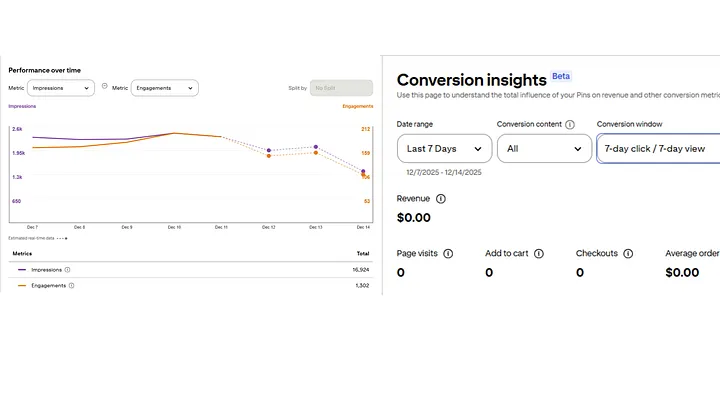
The results of those changes are documented in subsequent posts on this blog with real numbers, real dates, and real outcomes regardless of whether they look good or not.
If you are running a content blog and experiencing the same gap between traffic and revenue, the data from this experiment points to exactly where to look first. Not the traffic source. Not the content quality. The conversion layer.
That is almost always where the problem is.