
Let us start with the question most Pinterest guides bury at the end or avoid entirely: does Pinterest traffic actually make you money?
The honest answer is: yes, with significant caveats.
Pinterest traffic converts. But it converts differently from Google traffic, at different rates, for different types of monetization, and your expectations going in determine whether you feel good about those results or disappointed by them.
I am going to break this down with real context from my experience, no inflated numbers and no glossing over the parts that are genuinely modest.
The First Important Clarification: Impressions Are Not Traffic
Before we talk about conversion, we need to separate two numbers that are very different.
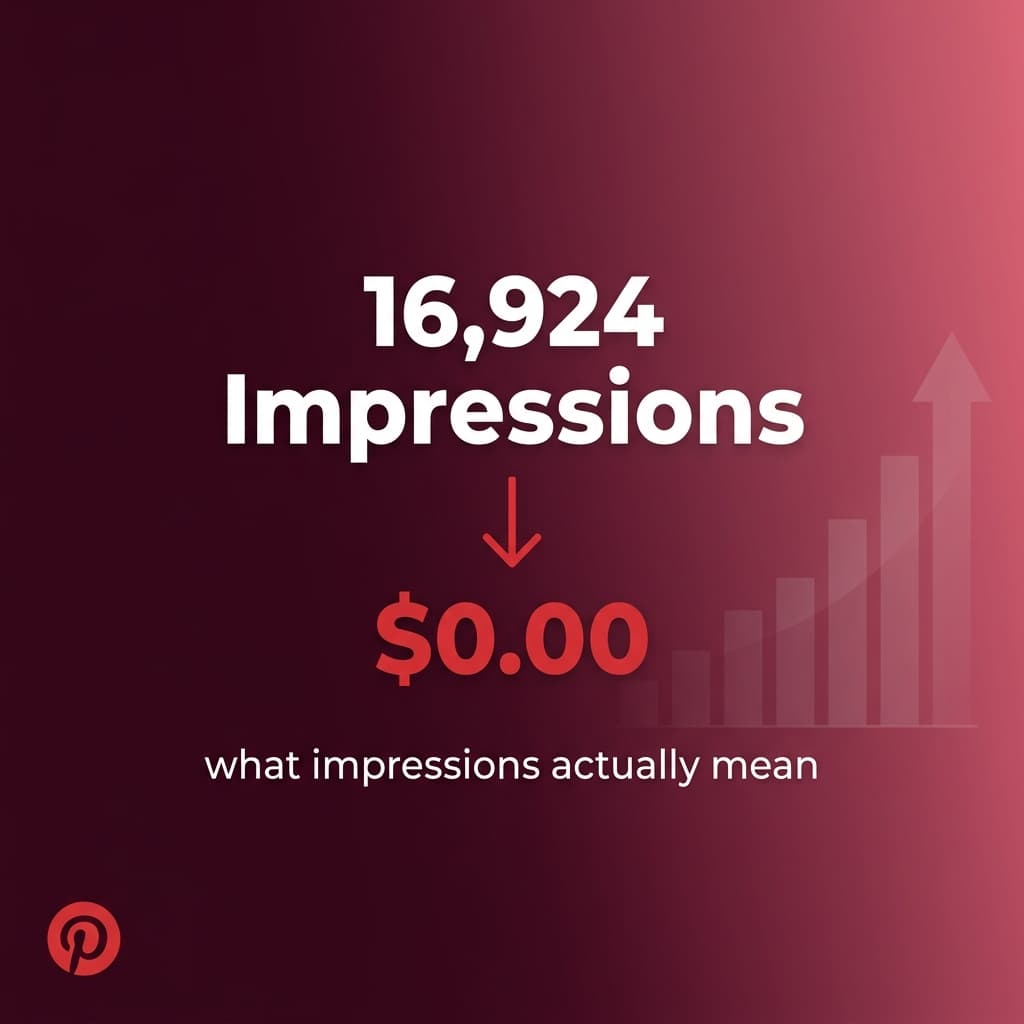
200,000 monthly Pinterest impressions does not mean 200,000 visitors to your blog.
Impressions measure how many times your pins appeared in user feeds or search results. The click-through rate from impressions to actual blog visits depends on your niche, your pin design quality, your headline specificity, and how well the pin matches what the searcher was looking for. The full breakdown of what impressions, clicks, and saves each mean, and how to read them in relation to each other, is in Pinterest Impressions vs Clicks vs Saves: What Actually Matters for Blog Traffic.
For a gardening and lifestyle niche, a realistic click-through rate from Pinterest impressions to blog visits falls between 0.5% and 2%. At 200,000 impressions and a 1% click-through rate, you are looking at approximately 2,000 blog visits per month from Pinterest.
2,000 visits per month is real traffic. It is not the kind of traffic that qualifies you for premium ad networks like Mediavine (which requires 50,000 sessions per month). But it is the difference between a blog that exists and one that has readers.
Everything that follows is in the context of real blog traffic from Pinterest, not impressions. Impressions do not earn revenue. Visitors do.
Display Ads: What Pinterest Traffic Produces
Display ad revenue depends on RPM (revenue per thousand page views), which varies by niche, geographic distribution of your traffic, and ad network.
Pinterest traffic tends to have a higher proportion of visitors from tier 1 countries (US, UK, Australia, Canada) compared to some other traffic sources. My Pinterest traffic came predominantly from the United States. US visitors carry higher RPM rates on most ad networks than traffic from lower-income geographies.
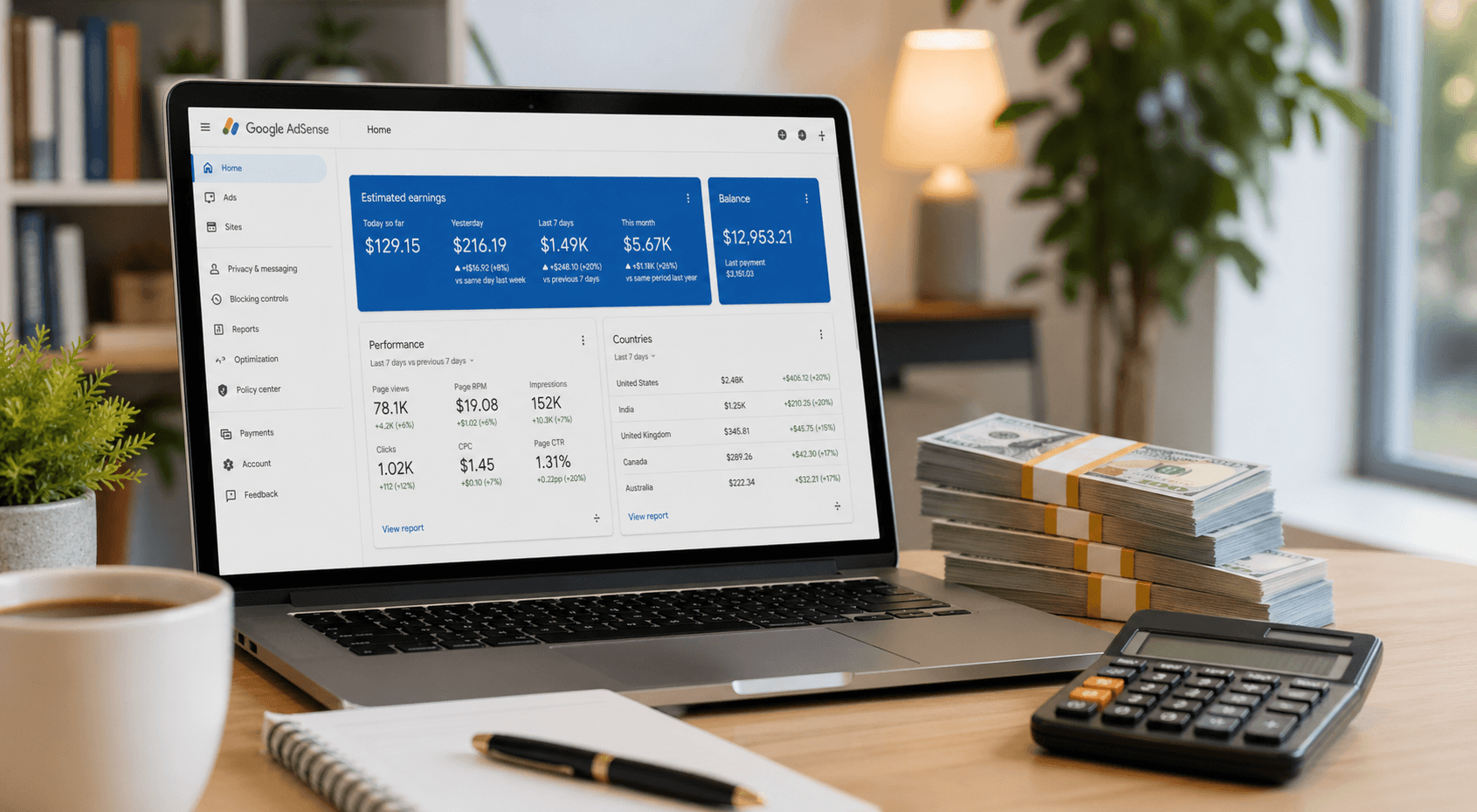
This geographic quality is one reason Pinterest traffic, even in modest volumes, was enough to support a Google AdSense application and approval. The full story of how that traffic led directly to my AdSense approval, and why I believe it accelerated the process, is in How I Use Pinterest to Drive Traffic to a Brand New Blog With No Domain Authority.
The actual RPM you earn from Pinterest-driven traffic depends entirely on your niche and ad network. Gardening content, food content, and home improvement content tend to earn higher RPMs than general lifestyle or entertainment content because advertisers in those categories have higher commercial intent behind their campaigns.
I am not going to give you a specific monthly dollar figure here because the number depends too heavily on variables outside my control: seasonality, ad market fluctuations, specific ad network tier, and article mix. What I will say is that modest Pinterest traffic at 1,000 to 3,000 monthly blog visits, in a niche with reasonable RPM rates, produces a small but real monthly ad revenue that grows proportionally as traffic grows.
If you are expecting Pinterest to generate significant display ad income at under 10,000 monthly visits, you will be disappointed. If you are expecting it to generate meaningful learning income, real data for future optimization, and enough signal to earn AdSense approval and begin building the traffic record that will eventually qualify you for better ad networks, that is exactly what it delivers.
Affiliate Marketing: Where Pinterest Traffic Can Outperform
This is where the conversion story gets more interesting.
Pinterest users are in discovery and planning mode. They are finding ideas, building mental wishlists, and planning future projects. A gardening reader who saves a pin about the best soil mix for container tomatoes and then clicks through to read the article is not in a passive browsing state. They are planning a container garden. They are actively considering what they need to buy.
That intent is commercially valuable for affiliate marketing.
A reader in planning mode who clicks an affiliate link to a recommended product (a specific soil mix, a container kit, a gardening tool) has a higher purchase likelihood than a reader who arrived at the same article without any prior search intent. Pinterest users have often self-selected into the "I am thinking about doing this thing" mindset before they ever arrive on your site.
This does not mean Pinterest traffic converts at extraordinary rates for affiliates. It means the intent profile of a Pinterest visitor is often better matched to affiliate content than the conversion rate numbers alone might suggest.
The affiliate programs that tend to convert best from Pinterest-driven gardening or lifestyle traffic are those with physical products (gardening supplies, home goods, food products) available on platforms with fast checkout like Amazon. The match between Pinterest's discovery orientation and Amazon's product discovery strength is natural.
The Monetization That Mattered Most Early On
The most tangible monetary impact of my Pinterest traffic in the early months was not from high individual earnings. It was from getting approved for AdSense.
Without Pinterest traffic, my site at three to four months old had almost no traffic from any source. A Google AdSense application from a site with effectively no traffic in that window would likely have been rejected or deferred.
Pinterest traffic meant the site had real human visitors. From real countries. Reading real articles. That is the signal AdSense evaluates. Getting approved meant I could begin monetizing immediately rather than waiting until Google organic traffic developed enough to support an application.
The early AdSense revenue is modest. Everything about a new blog's revenue in its first year is modest. The point is having the infrastructure in place while the site is still building toward the traffic levels that produce meaningful income.
The Honest Summary of Conversion
Pinterest traffic converts for ads at rates comparable to other content discovery traffic, with geographic quality that tends to favor higher RPMs if your audience skews toward US and UK readers.
Pinterest traffic converts for affiliates in niches with physical product recommendations, because the planning-mode intent of Pinterest users aligns naturally with research-and-buy behavior.
Pinterest traffic does not convert at the rates that position-zero Google traffic or high-intent long-tail Google search traffic converts. A reader who Googled "best soil mix for container tomatoes" and found your article has stronger immediate purchase intent than a reader who found a pin about container gardening in their feed. That distinction is part of what I covered in Pinterest Traffic vs Google Traffic for a New Blog: Which Came First for Me, each platform sends a different kind of reader at a different stage of intent.
Pinterest is a top-of-funnel traffic source. It introduces readers to your content and begins a relationship. That relationship can convert into ad revenue, affiliate income, email subscribers, and return visitors over time. But it is not a bottom-of-funnel direct response channel and treating it like one will produce disappointing results.
Build Pinterest for traffic volume and topical authority. Build Google for high-intent traffic that converts efficiently. Use both together.
Kamal Deen builds niche blogs and grows them with Pinterest and SEO.