If you search for blogging income reports, you will find two types of content. The first type is people who quit after three weeks because they made zero dollars. The second type is people reporting $20,000 months while conveniently selling a course on how they did it.
The reality of building a profitable blog from scratch is completely different. It is a slow, methodical grind that requires hundreds of hours of unpaid labor before the foundational metrics even begin to register.
To show what this actually looks like, I am sharing the exact timeline and data for one of my sites: BarkSecret.com, a blog in the gardening and wellness niche.
This is the raw data of what it took to get out of the sandbox, secure ad network approval, and earn the very first dollars online.
The Three Month Google Sandbox
The most common reason new bloggers quit is the discrepancy between effort and feedback in the first 90 days.
When you launch a new domain, Google does not trust it. You can publish 50 perfectly optimized articles on day one, and you will still see a flat line in Google Search Console for months. This period is commonly referred to in SEO circles as the Google Sandbox.
For BarkSecret.com, that is exactly what happened. The site was live, the content was published, and the organic traffic from Google was zero.
The organic search traffic finally began to register precisely at the three month mark.
| Milestone | Time to Achieve | Reality Check |
|---|---|---|
| First Article Indexed | 2 weeks | Google knew the site existed but refused to rank it |
| First Organic Search Click | 3 months | The sandbox period ends and Google slowly tests the content in search results |
If you are currently in month two of a new blog and seeing zero traffic, your site is not broken. Your timeline is simply normal.
Diversifying with Pinterest
Waiting three months for Google to send a single visitor is demoralizing. To combat this and build an alternative traffic source, I integrated Pinterest into the strategy from the beginning.
Unlike Google, Pinterest operates as a visual search engine that does not heavily penalize brand new accounts. If your pin design is good and your keywords are relevant, Pinterest will test your content in user feeds within days.
By creating multiple pins for every article published on BarkSecret.com, I was able to generate stable, recurring traffic while waiting for Google to catch up. Pinterest provided the early validation that the content topics actually had audience demand.
The AdSense Approval Battle
Getting approved for Google AdSense is the first major monetization hurdle for most bloggers. It is also notoriously difficult for new sites.
BarkSecret.com was rejected by Google AdSense four separate times.
Each rejection comes with a vague "low value content" or "policy violation" email that provides almost zero actionable feedback. Through trial, error, and testing, I narrowed down exactly what the site was actually missing.
The successful fifth application was approved after implementing three specific fixes:
- Rock Solid Legal Pages: I added comprehensive, distinct pages for Privacy Policy, Terms of Service, Affiliate Disclosure, and an About page detailing the real human behind the site.
- Quality Consistent Traffic: Ad network reviewers look at your incoming traffic. The combination of the growing Pinterest traffic and the newly arriving Google organic traffic provided a baseline of legitimate human visitors.
- Patience and Site Age: Applying in month one is almost always a guaranteed rejection. The site needed to mature and demonstrate a consistent publishing schedule over time.
The Unexpected Benefit of Reddit
When the AdSense approval finally came through, I posted the victory and the timeline on Reddit to share the experience with other builders in the trenches.
That single Reddit post triggered a secondary, highly valuable SEO event.
People reading the Reddit post went to Google and searched for "BarkSecret" directly to see what the site looked like. This created a sudden spike in navigational brand searches.
When users search for your brand name and click your site, it sends a massive trust signal to Google. It proves your website is a real entity that people actively want to find. This helped solidify the site's authority and further accelerated the organic growth that was just beginning to take root.
The Financial Reality of the First Phase
After the dust settled, the site was officially monetized through both Amazon Associates and Google AdSense.
The total earnings across both platforms at the end of this massive sprint?
Approximately $10.
To someone who has never built a business, working hundreds of hours for $10 sounds like a complete failure. To anyone who understands digital media, $10 is the ultimate proof of concept.
Going from $0 to $1 is the hardest transition in business. Earning the first $10 means the machine is fully built and functioning. The infrastructure is complete:
- Google is actively indexing and ranking the content
- Pinterest is providing a stable secondary traffic stream
- The domain has exited the sandbox and has established trust
- The ad networks and affiliate programs are actively tracking and paying out
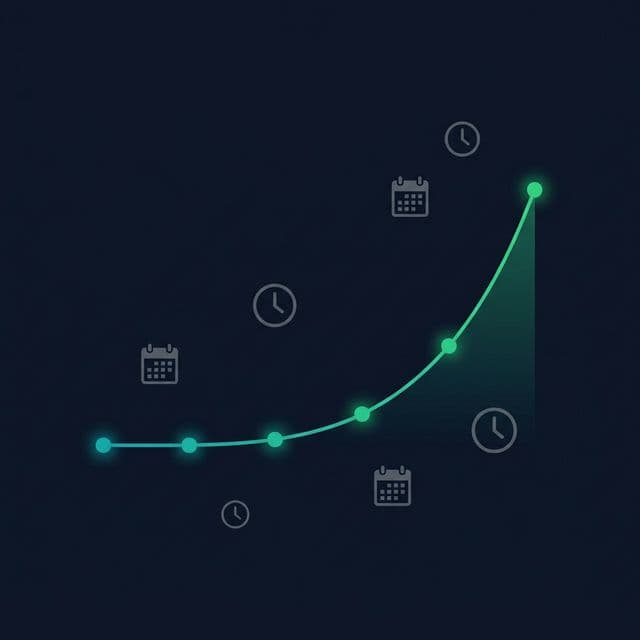
The foundation is built. Everything that comes next is a matter of scaling the inputs. If you are in the middle of your own 1,000 hours, do not quit in month two. The math does not start working until month four.