A Pinterest impression is counted every time one of your pins appears on someone's screen.
That is the complete definition. The pin showed up in a feed, in search results, or on a board. The person does not have to click it, hover over it, or even notice it. It appeared. That is an impression.
That is also where most new Pinterest users stop reading and start making bad decisions.
What an Impression Is Not
An impression is not a visit to your blog.
It is not a click. It is not a sale. It is not evidence that anyone read anything you wrote.
It is a count of appearances. Nothing more.
This distinction matters because Pinterest makes impressions very easy to accumulate. A new account with decent keyword targeting and consistent pinning can hit 50,000 monthly impressions within a few months without a single person ever visiting the blog behind those pins. The algorithm is generous with distribution. Distribution is not the same thing as traffic.
Why Impressions Feel Like Progress
They grow fast. They are the biggest number in your Pinterest analytics. When you go from 1,000 to 10,000 to 100,000 impressions over a few months, the chart looks like something is working.
Something is. The algorithm is distributing your content. That is real and it matters.
But distribution is just step one. The question that actually matters for a blogger is what percentage of those impressions turn into outbound clicks. Outbound clicks are the metric that connects Pinterest activity to your blog. They are the only Pinterest number that translates directly into real traffic.
The ratio of outbound clicks to impressions is your click-through rate. If you are getting 100,000 monthly impressions and 500 outbound clicks, your CTR is 0.5%. That is on the low end but within normal range. If you are getting 100,000 impressions and 50 clicks, something in your pin design or headline is not working.
Impressions tell you the algorithm is willing to show your content. Outbound clicks tell you whether people are willing to act on it.
What "Impressions Going Down" Actually Means
If your Pinterest impressions are declining, the most common causes are:
Reduced pinning frequency. Pinterest evaluates accounts over time. If you slow down how often you publish pins, the algorithm has less fresh content to distribute and impression volume drops accordingly.
Keyword targeting drift. If your new pins are targeting terms with lower search volume or in categories where your account has less established authority, each individual pin will reach a smaller audience.
Seasonal fluctuation. Many niches see impression swings tied to seasons. A home decor account will see higher impressions in January and September than in July. A decline in impressions is not always something you caused.
Algorithm updates. Pinterest periodically changes how it distributes content. A drop across your entire account that happened on a specific date is more likely an algorithm shift than a content quality issue.
Before troubleshooting declining impressions, check whether your outbound click rate held steady during the same period. If impressions dropped but your click rate stayed the same or improved, fewer people are seeing your content but the ones who do are more interested. That is a targeting quality improvement, not a failure.
The $0 Problem
Here is the lesson that took me a full week of real data to actually absorb.
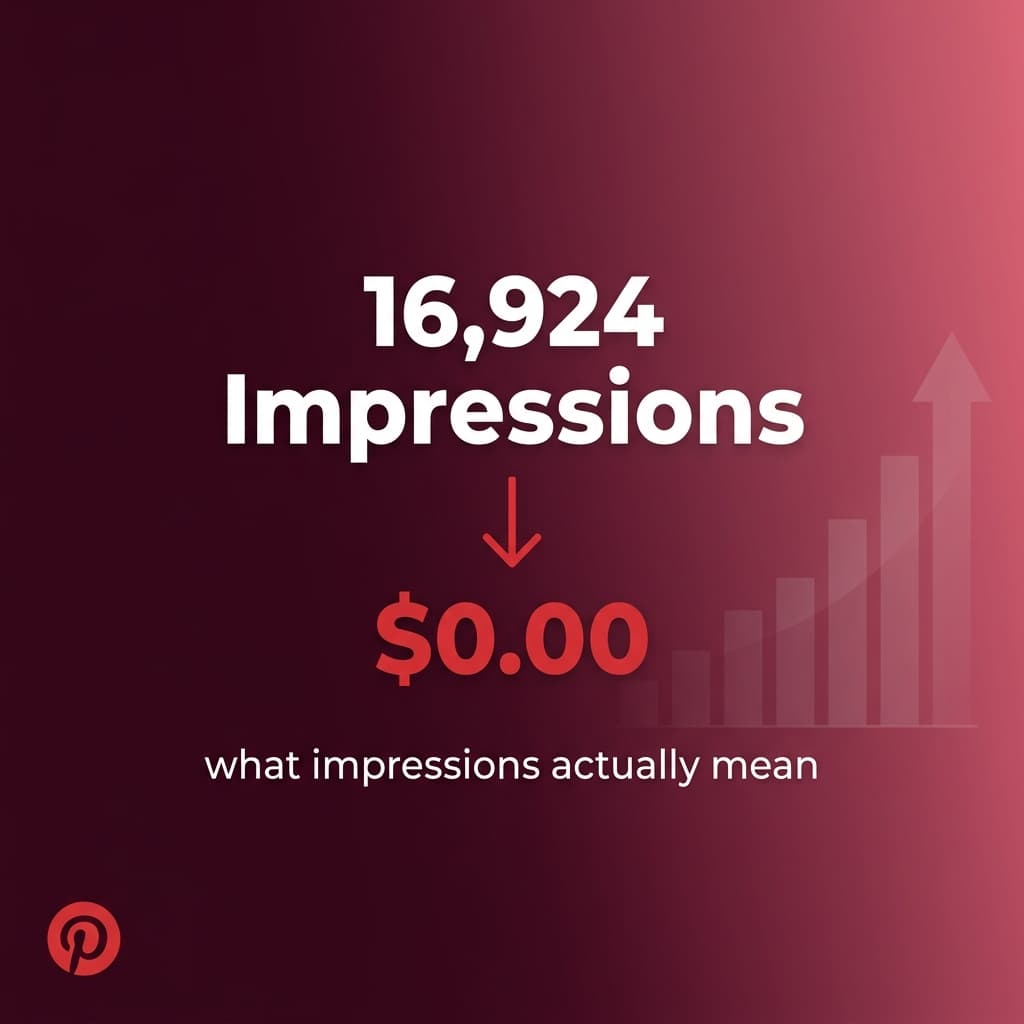
I got 16,924 Pinterest impressions in seven days on a blog that was less than 30 days old. Real traffic from real countries. 163 saves. Strong engagement numbers by any objective measure.
Revenue that week: $0.00.
Not because Pinterest failed. Because impressions are not money. They are attention, and attention without a conversion system produces exactly $0 every single time, regardless of how large the number is.
The full breakdown of that week, including exactly what the analytics showed and what structural problems it revealed, is documented in I Got 16,000 Pinterest Impressions in 7 Days and Made $0. That post is worth reading if you are currently watching your impression count grow while your revenue sits flat.
The short version: a Pinterest visitor who arrives at an informational blog post is in reading mode, not buying mode. Unless the page they land on gives them a specific reason to take an action, they read, possibly save the post, and leave. Every session is a closed loop. Traffic came in. Nothing came out.
What Actually Moves the Needle
The metrics worth paying attention to alongside impressions:
Outbound clicks. This is the one that matters most for bloggers. It is the direct measure of how many people Pinterest sent to your site. Low outbound clicks relative to impressions means your pin design or headline is not compelling enough to make people want to read more.
Save rate. Saves are a strong signal to the Pinterest algorithm that your content is worth distributing more widely. A pin with a high save rate will often see growing impressions over time even without any additional work. Saves are also secondary discovery opportunities, every time someone saves your pin to their board, your content becomes visible to that person's followers.
Outbound click rate by pin. Not all pins perform equally. Impressions across your account can be dominated by three or four pins that are genuinely resonating. Knowing which specific pins are converting impressions into clicks tells you what is working in your design and headline approach, so you can replicate it.
The full relationship between these three metrics and how to diagnose what is wrong when they do not line up is in Pinterest Impressions vs Clicks vs Saves: What Actually Matters for Blog Traffic.
The One-Sentence Summary
Impressions measure how often Pinterest showed your pins. Outbound clicks measure whether any of that exposure turned into an actual blog visit. Only one of those numbers is your business working.
Watch both. Optimize for clicks.
Kamal Deen builds niche blogs and documents what the analytics actually show. His Pinterest data comes from his own active accounts.