Most people treat Pinterest boards like filing cabinets.
You create a board, you name it something descriptive, you pin things to it. That's the entire mental model. And if that is how you are thinking about boards, you are leaving a significant amount of distribution on the table.
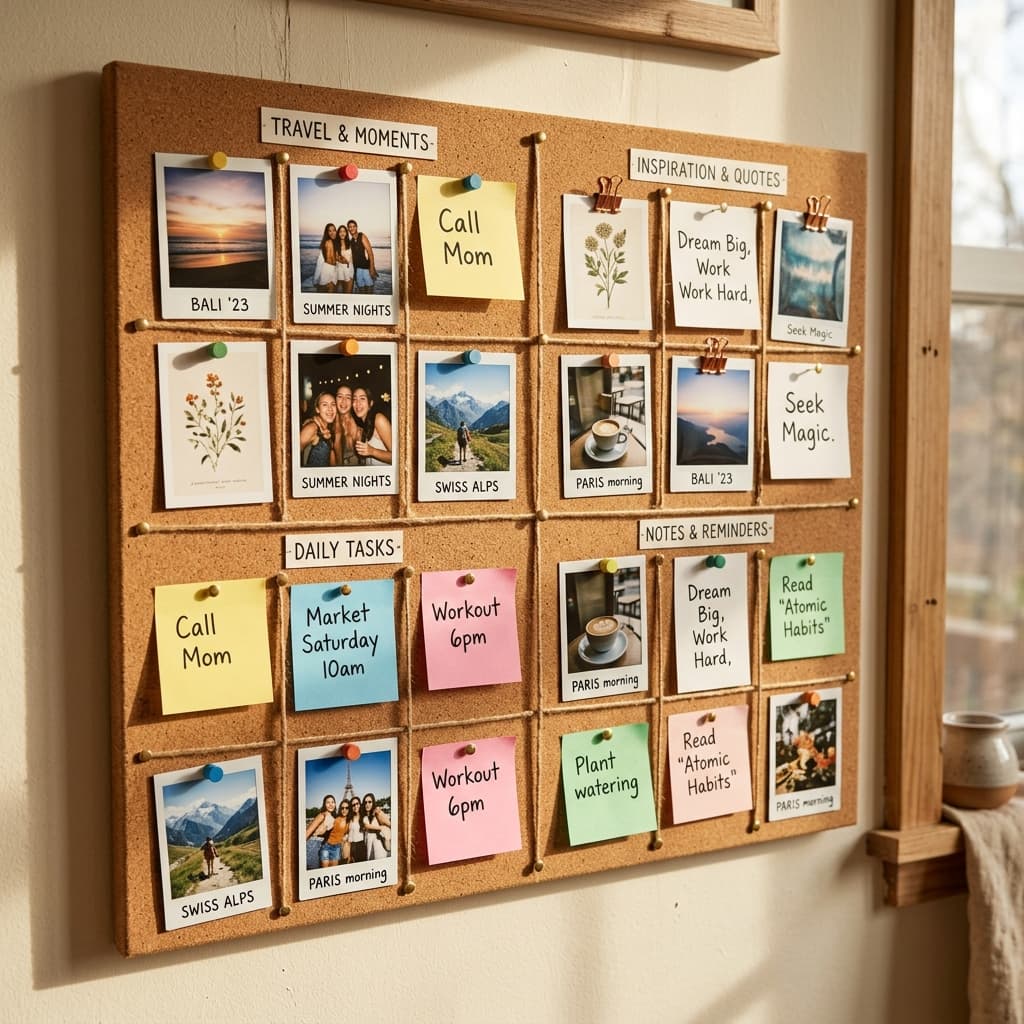
Pinterest boards are not filing cabinets. They are audience targeting tools.
Every board you create tells the algorithm: here is the topic, and here is the audience. When you pin to that board, Pinterest cross-references the pin's keywords with the board's context to decide who to show it to and in which searches it should appear. A pin saved to a well-named, well-described board in a clear niche gets a stronger algorithmic signal than the exact same pin saved to a generic or vague board.
This is why board strategy matters. And this is how I do it on my gardening niche blog, the one that went from zero to 200,000 monthly impressions in under four months.
How I Came to Understand This: The Board That Broke Away
When I set up my Pinterest account, I created several boards covering different aspects of my niche: container gardening, veggie garden content, natural remedies, herbal wellness, and a master board for the blog itself.
By month two, something interesting happened. One board was generating the overwhelming majority of my impressions. Not a roughly equal split across boards. One board absolutely dominating, with the others producing a fraction of what it was delivering.
That board was my Veggie Garden board.
Why that board and not the others? Looking back, it checks every box that makes a board high-performing: clear and searchable name, specific and engaged audience actively searching that term on Pinterest, high visual appeal in the content category, and pins that generated strong save rates because people were bookmarking them for reference. You can see which of your boards is doing this in your analytics, the exact signals to track are in How to Use Pinterest Analytics to Find Your Best-Performing Content.
The lesson: board structure does not distribute your success equally across all your boards. The algorithm identifies the board where your content finds its strongest audience and concentrates distribution there. Your job is to understand why that board won, build more like it, and feed it aggressively when it breaks out.
Here is the full system.
Part One: How Many Boards to Start With
New accounts commonly make one of two mistakes. The first is creating twenty boards on day one to look established. The second is creating two boards and cramming everything into them.
Five to eight focused boards is the right starting point.
Here is why: your early pin volume is finite. If you spread that volume across twenty boards, no single board gets enough pins to give the algorithm a coherent picture of what it is about. The algorithm needs to see consistent pinning into a board over time before it starts distributing that board's pins confidently. This connects directly to the pinning frequency question, if you are only publishing 5 pins per day, spreading across too many boards dilutes the signal even further.
Starting with five to eight boards concentrates your early volume into a smaller number of categories. Each board accumulates enough signal faster. The algorithm identifies your primary audiences sooner.
Once those boards are established and you have enough content to support more categories, adding boards later is completely fine. But start focused.
Part Two: Naming Boards (This Is the Most Important Decision)
Your board name is the primary keyword signal Pinterest uses to understand what the board is about.
This means your board name should match exactly how your audience searches for this topic, not how you think about it internally. This is the same principle that drives the keyword research I use for pin descriptions, the full method is here, and the same autocomplete tool that finds pin keywords is exactly what you use to validate board names.
What that looks like in practice:
- "Veggie Garden" beats "Garden Content" because real users search for veggie garden content
- "Container Gardening" beats "My Gardening Posts" for the same reason
- "Pinterest for Bloggers" beats "My Pinterest Tips" every time
- "Beginner Blogging Income" beats "Blogging Stuff"
The test is simple: type what you are considering as a board name into the Pinterest search bar. If it auto-completes and shows related searches, real people are searching that phrase. If it does not autocomplete to anything, the name is probably too internal and you should rework it.
One rule worth following: put the most important keyword at the beginning of the board name. Pinterest surfaces board names in search results and the first word carries more weight than the last.
Part Three: Writing Board Descriptions That Actually Signal Something
Board descriptions support up to 500 characters. Most board descriptions look like this:
"A collection of my favorite garden posts!"
That description tells Pinterest nothing useful. It contains no keywords, no topical signal, and no context about who this board is for.
Here is what a board description should actually look like:
"Practical guides for growing vegetables at home, including raised beds, container gardens, and small-space layouts. Tips on soil prep, companion planting, watering schedules, and growing food from seed for beginner and intermediate gardeners."
That description contains: the primary topic, specific sub-topics, skill level targeting, and multiple semantic keywords the algorithm can use to match the board with relevant searches. Two to three sentences, written naturally, with the keywords embedded in context rather than listed.
The format that works: one sentence about what the board covers, one sentence about who it is for or what they will find, optionally a third sentence with specific sub-topics.
Write every board description this way before you publish your first pin. Updating descriptions later is possible but going back and fixing poor descriptions on established boards is slower than getting it right the first time. The same applies to your pin descriptions, the description writing framework in How to Write Pinterest Descriptions That Actually Get Clicks applies to board descriptions too, in principle.
Part Four: The Master Board (And Why Every Blog Account Needs One)
Create one board named after your blog or your brand. Pin every single piece of content you publish to this board in addition to its relevant category board.
This board serves as the master library of your content on Pinterest. Visitors who land on your profile can browse everything you have published in one place without jumping between category boards. It also means every article you write gets pinned to at least two boards: the relevant category board and the master board.
Two board placements per pin is a minor thing in isolation. Over time, as your content library grows and you are publishing multiple pins per article across multiple boards, the compounding effect is meaningful. Since I create five pins per blog post, each article naturally ends up spread across several boards with different keyword angles on each pin.
Name this board something like "Your Blog Name" or "YourBlogName.com" so it is immediately recognizable as the home base for your content.
Part Five: Niche vs General Boards
For a niche blog, every board should be directly relevant to your core topic.
This sounds obvious but it is easy to rationalize creating boards that drift slightly from your niche. You write about container gardening and Pinterest growth, so maybe you create a board for general blogging tips. Or you write about gardening and you dabble in natural remedies, so you create a board for wellness.
The problem is algorithmic dilution. Pinterest reads your account's board structure to categorize what your account is about overall. A tight cluster of boards all covering container gardening and plant growth signals a clear, specific niche. Adding boards for blogging tools and wellness and travel inspiration makes the algorithm work harder to categorize you, and when the algorithm cannot categorize you clearly, it distributes you to a less defined audience.
My advice: if you have content in multiple unrelated niches, create separate Pinterest accounts for them. Each account stays tight and niche-specific. The algorithm can place each one clearly in front of the right audience.
I run Pinterest for more than one blog. Each blog has its own account. The strategies compound independently without muddying each other's signal. This system, including how the multi-blog setup works, is covered in Pinterest for Niche Site Builders: My Complete System.
Part Six: Populating Boards Before You Pin Your Own Content
When you create a new board, Pinterest prompts you to add starter pins. Do this step. Pin ten to fifteen relevant, high-quality pins from other creators to each new board before you start adding your own content.
This accomplishes two things. It gives the algorithm immediate context about what the board is covering, which helps with categorization. And it makes your boards look established and useful to human visitors rather than empty shells with one or two pins.
After the initial population, you do not need to keep repinning other people's content continuously. The focus of your ongoing pinning strategy should be original pins linking to your own articles. But seeding each board with starter content is worth the fifteen minutes it takes.
Part Seven: Reading Board Performance and Responding to It
Once your account is running, Pinterest Analytics shows you which boards are generating the most impressions and outbound clicks. Check this at least weekly, ideally with a system rather than just casual browsing. The full analytics review process is in How to Use Pinterest Analytics to Find Your Best-Performing Content.
What you are looking for is the board that is outperforming the others. There will almost always be one. When you find it, the correct response is to increase your publishing volume to that board. More pins, more keyword variations, more article coverage in that specific sub-topic.
This is what I did when the Veggie Garden board broke away from the others in month two. I did not try to balance my publishing evenly across boards to "spread the love." I doubled down on the board that was winning, and it continued to dominate impressions for the rest of the growth period.
The algorithm tells you what it wants to distribute if you are reading the data correctly. When it shows you a board that is working, feed it.
Boards that are consistently flat in impressions and clicks after three months are boards to audit. Either the name or description is not giving enough keyword signal, the content being pinned to them is not strong enough, or the audience you are trying to reach on that topic is not active on Pinterest in the way you expected. Flat boards can sometimes be revived by improving the description and pinning stronger content. Boards that stay flat after you try that are candidates for being archived.
The Board Structure I Use
For a single niche blog, here is the structure I run:
One master board named after the blog itself. Every article I publish gets pinned here.
Three to five core category boards that match the main content pillars of the blog, all named with searchable keyword phrases and written with full, keyword-rich descriptions.
One or two seasonal or trend-specific boards that I activate and deactivate as content seasons change.
Total boards actively maintained: around seven to ten.
That number keeps things manageable while giving the algorithm enough organized structure to understand exactly what the account is about and who to show it to.
The Summary That Matters
Pinterest boards are not organizational tools. They are algorithmic targeting signals. The name, description, and content mix of each board determines which audience sees your pins and in which searches they appear.
Start with five to eight focused boards. Name them the way your audience searches, not the way you think about your content internally. Write proper keyword-rich descriptions for every board. Create a master board for your blog. Populate new boards with starter content before you pin your own work.
Then watch analytics. One board will break out before the others. When it does, feed it.
That is the full board strategy. Straightforward in principle, requires attention in execution, and directly responsible for the difference between a Pinterest account that plateaus and one that compounds.
Kamal Deen builds niche blogs and grows them with Pinterest and SEO.